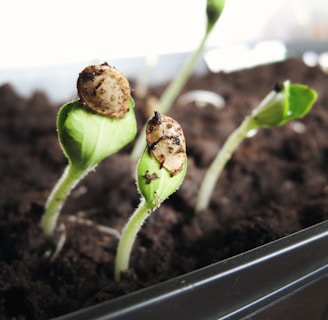
The Complete Guide to Starting Seeds Indoors for a Thriving Spring Garden
Discover how to start seeds indoors with a simple, beginner-friendly setup using seed trays, seed starting soil, heat mats, and grow lights. This guide includes easy flowers and vegetables to grow from seed so you can enjoy a thriving spring garden.
NATURE
2/17/20265 min read


Bonjour! Just a note that this post may contain affiliate links. That means I may earn a small commission if you choose to make a purchase — at no extra cost to you. I only share items I use, love, or would recommend to a dear friend. Merci for supporting this little corner of the internet!
How to Start Seeds Indoors: A Simple Spring Setup for Beautiful Blooms & Fresh Veggies
As spring finally starts to melt away the doldrums of winter, the warm sunshine brings hope for more than just having an apéro on the terrace, it means gardening! Over the years I've worked on creating a fool-proof setup to starting seeds indoors to ensure an abundance of blooms and veggies for the garden. Living in the midwest means our growing season isn't as long as those further south, but that doesn't mean we can't start spring a little early indoors.
If you’ve ever wanted to grow your own flowers or vegetables from seed but felt overwhelmed, I promise — it’s simpler than it looks. Below I have the exact same tools and materials I use to start my own seedlings each spring, along with a few easier flower and veggie varieties to start with.
Let’s grow something beautiful this spring together.
My Simple Indoor Seed Starting Setup
You don’t need anything elaborate — just a few reliable supplies that work together beautifully.
1. Plastic Seed Starting Trays
I use durable plastic seed starting trays with individual cells. These make it easy to:
Keep seedlings organized
Prevent root tangling
Transplant with minimal disturbance
Reuse season after season
I love trays with drainage holes and a solid base tray underneath to catch water. It keeps everything tidy and protects your shelves or floors. Because believe me, I've had some near catastrophes with water going everywhere!
And I know there are a lot of different opinions about seed starting trays. I would like to move to stainless steel trays and the soil block method. But for me, I reuse my plastic trays (make sure you sanitize them between seasons) and they work well for me. Of course though choose what works for you and your garden!
2. Seed Starting Soil Mix
This part is important: use seed starting mix, not garden soil.
Seed starting soil is:
Light and fluffy
Sterile (so it reduces disease)
Designed for delicate new roots
Regular garden soil is too heavy and can suffocate tiny seedlings. A quality seed starting mix gives them the gentle start they need. Monty Don (an amazing gardener) has his own "recipe" for making seed starting mix at home which can be found in his book here. It's a fantastic resource if you need additional guidance or inspiration.
3. Heated Seed Mats
Many seeds germinate best in warm soil. Since most homes aren’t quite warm enough in late winter, I use heated seed mats underneath each tray.
These:
Speed up germination
Increase success rates
Create consistent warmth
They’re especially helpful for tomatoes, peppers, and other warm-season crops.
4. Hanging Grow Lights
Once your seedlings emerge, having some "sunshine" becomes the next big step.
I use hanging grow lights suspended just a few inches above the seedlings. This prevents them from becoming leggy and weak. As they get taller you'll just move them further and further up and away from the seedlings. You'll know if the grow lights are too close to the seedlings if you notice burning and browning on the leaves.
Natural window light often isn’t strong enough in early spring. Grow lights:
Mimic strong daylight
Keep plants compact and sturdy
Dramatically improve results
I keep mine on for about 14–16 hours per day. You can plug them into a timer so they turn on and off for you. One less thing to remember and makes the growing experience more enjoyable and less of a chore.
5. Wire Multi-Shelf Unit
To keep everything organized, I use a wire multi-shelf rack. This allows me to stack trays vertically with:
A heat mat on each shelf
A grow light hanging above each level
Plenty of airflow
It turns one small corner into a full seed-starting station. Practical and surprisingly beautiful in its own way. I use this affordable wire multi-shelf because it can withstand a little water and dirt without much damage.
Easy Flowers to Start Indoors
If you’re new to seed starting, these flowers are wonderfully forgiving:
🌸 Zinnias
Bright, cheerful, and fast-growing. They germinate quickly and bloom all summer.
🌼 Cosmos
Delicate and airy with a cottage garden feel. They’re incredibly easy.
🌻 Sunflowers (dwarf varieties)
Start indoors for an earlier show in the garden.
🌺 Snapdragons
These benefit from an early indoor start and add romantic vertical interest. Snapdragons do like a colder start too, so you can harden them off and plant them outside pretty early.
🌸 Marigolds
Low-maintenance, vibrant, and great for companion planting.
Easy Vegetables to Start Indoors
These vegetables thrive when started inside:
🍅 Tomatoes
A classic for a reason. Start 6–8 weeks before your last frost.
🌶 Peppers
They love heat — the seed mats make a big difference here.
🥬 Lettuce
Quick-growing and satisfying for early harvests.
🥦 Broccoli
Strong transplants that handle cool weather beautifully.
🧅 Onions
Great to start early for a long growing season.
Simple Seed Starting Tips for Success
A few things I’ve learned over the years:
Label everything (trust me on this one).
Keep soil moist, not soggy.
Remove humidity domes once seeds sprout.
Keep grow lights close to seedlings.
Harden plants off gradually before transplanting outdoors. (This is a whole process and I'll probably do a full post about this alone.)
Starting flowers and vegetables from seed allow you to create an abundance of blooms and veggies for the cost of a seed packet. Yes there's an investment in the beginning with heat mats and lights and things, but after that it's just some soil and some seeds year after year. And your seed mats, shelf, lights, and trays should last many many seasons. This also gives you the freedom to grow things that aren't readily available at your local gardening shop. So those pastel zinnias you've always wanted but could never find? You can grow them yourself and love them even more!